Project Overview
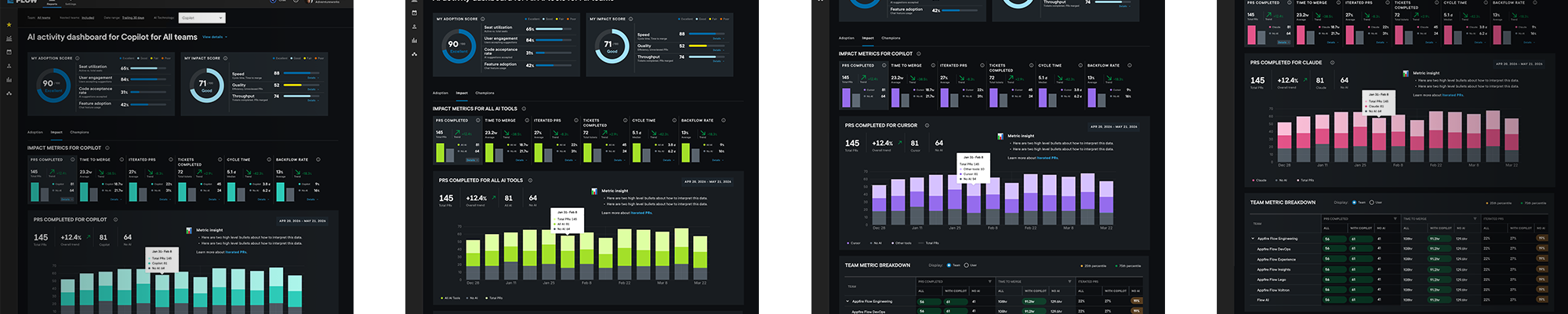
As AI adoption accelerates, Flow customers are asking the question, “Is AI actually improving developer outcomes, or simply increasing output?” I led the design of an AI Impact dashboard that helps engineering leaders understand how AI influences team performance. The goal is to translate complex development signals traditionally surfaced by Flow metrics into a clear, actionable view of how AI impacts development across an organization.
Problem: Customers could see AI adoption, but they lacked visibility into whether AI was creating meaningful improvements in their development cycles. We needed a way to show the outcomes of AI usage by surfacing a balance (or imbalance) of performance, including speed, quality, and throughput. The challenge was compounded by the rapidly evolving AI landscape. The metrics that matter today may not be the metrics that matter tomorrow, so the solution needed to be flexible enough to quickly evolve with customer needs.
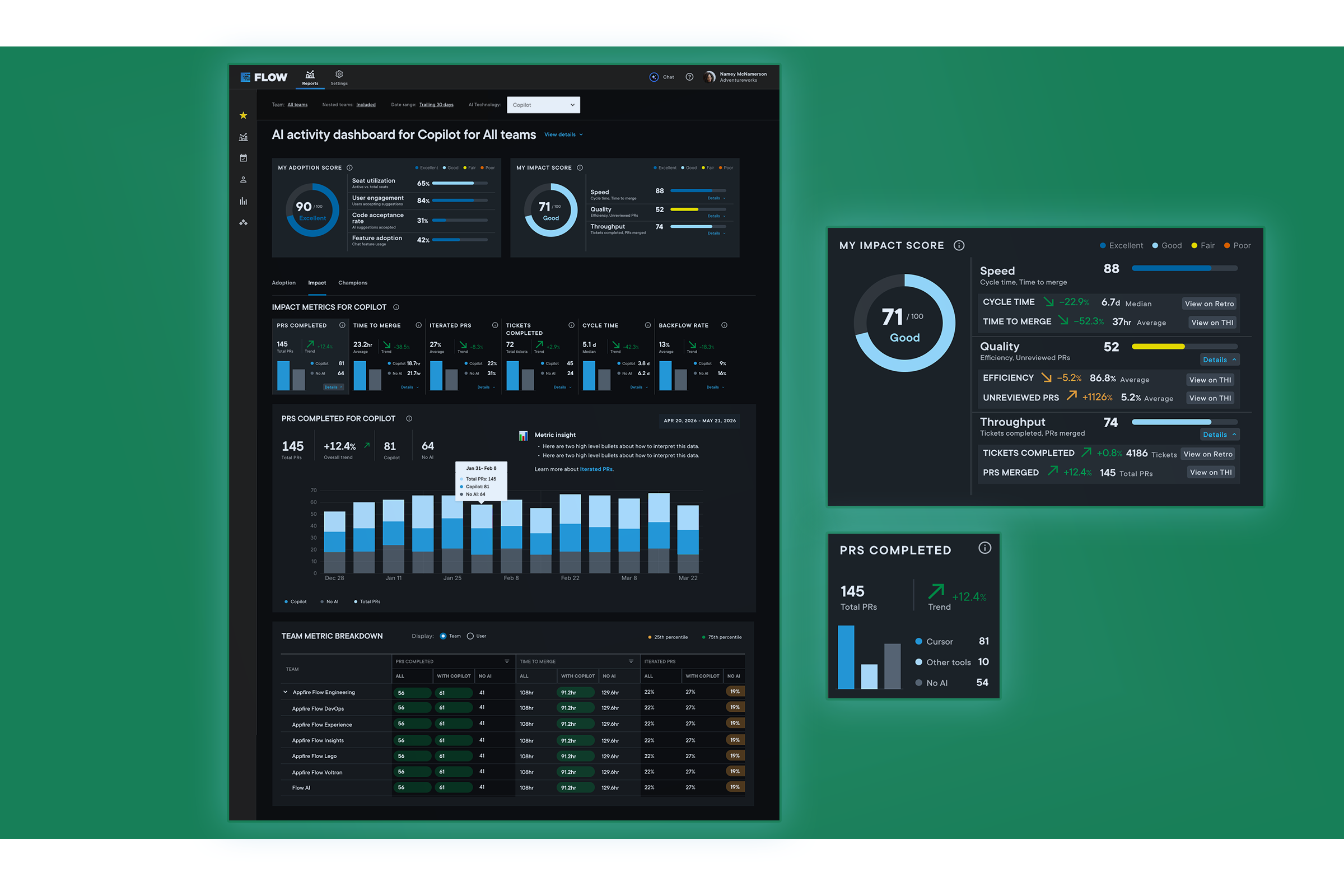
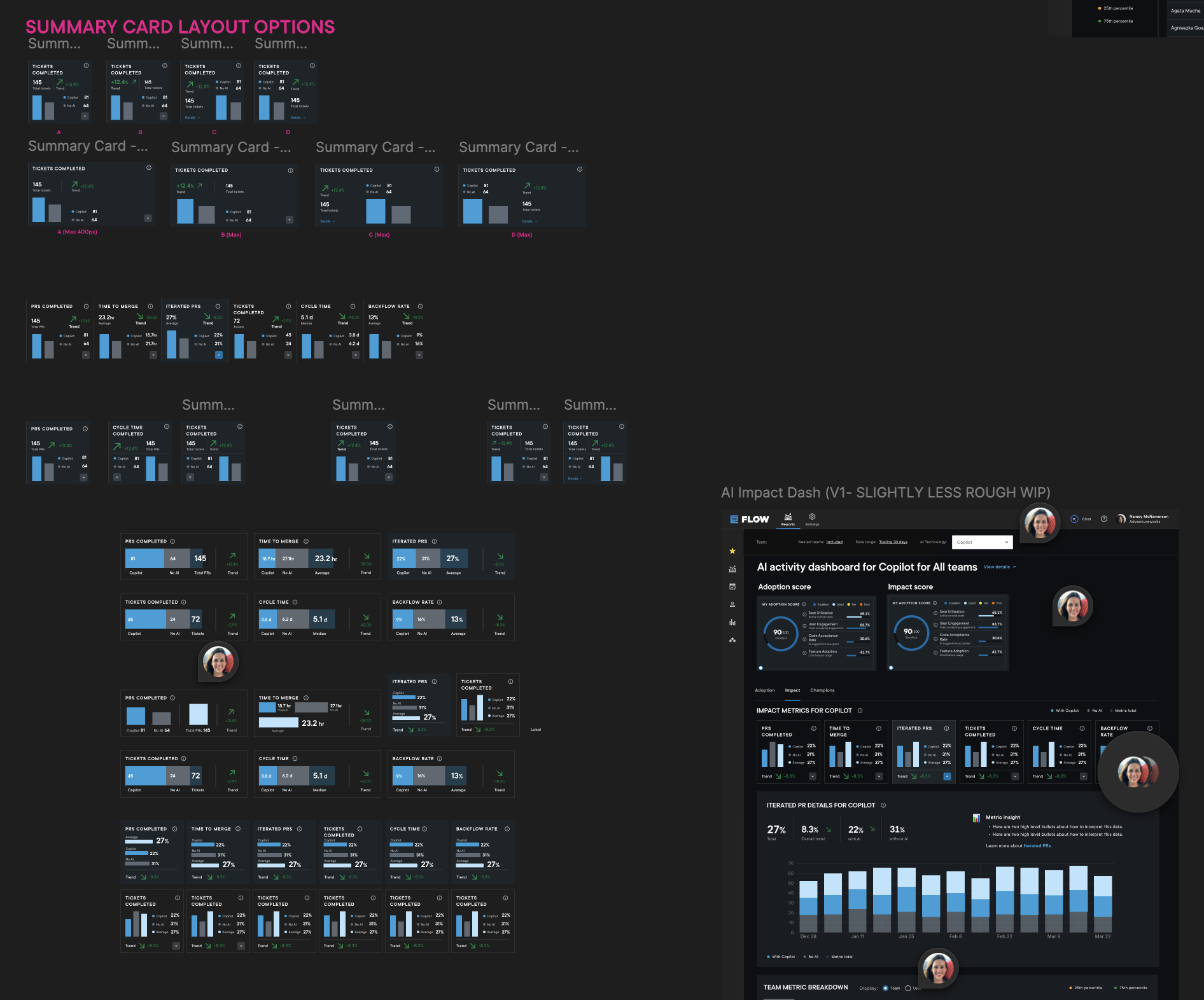
Solution: I designed an executive-facing dashboard centered around a composite AI Impact Score that combines key indicators of engineering performance (metrics in speed, quality, and throughput categories) into a single, clear score. The Impact score allows leaders to start with a high-level view of organizational impact, then drill down into the metrics driving changes over time, with additional visibility at the team and individual levels. This structure helps users understand what changed and move directly to identifying where action may be needed.
Deliverables:
A high-level AI Impact Score with trend analysis over time
Supporting metrics focused on speed, quality, and throughput with AI vs. non-AI comparisons
Flexible design components ready for implementation that aligning with the existing design system
The dashboard established a foundation that could evolve as AI tooling and customer expectations continue to change. There are already spinoff plans for a follow up report (AI Cost and ROI.)
Leadership and Impact
I led the initiative from concept through execution and customer beta release, helping define both the product vision and the approach to measuring AI effectiveness.
Beyond the dashboard itself, I introduced AI-assisted design workflows into my own process that increased iteration speed and enabled faster collaboration across product and engineering. The project also helped shift internal conversations from AI adoption metrics toward outcome-based measures of value.
Context and Challenges
This project was delivered within a compressed timeline and an emerging problem space with few established patterns.
Success depended on defining meaningful measures of AI impact while remaining adaptable to a rapidly changing market. Limited time for traditional research required a more iterative approach focused on learning through delivery and customer feedback. The report was released with knowledge that iterations would be happening as a fast follow.
Design Approach
To move quickly, I incorporated AI directly into my design workflow.
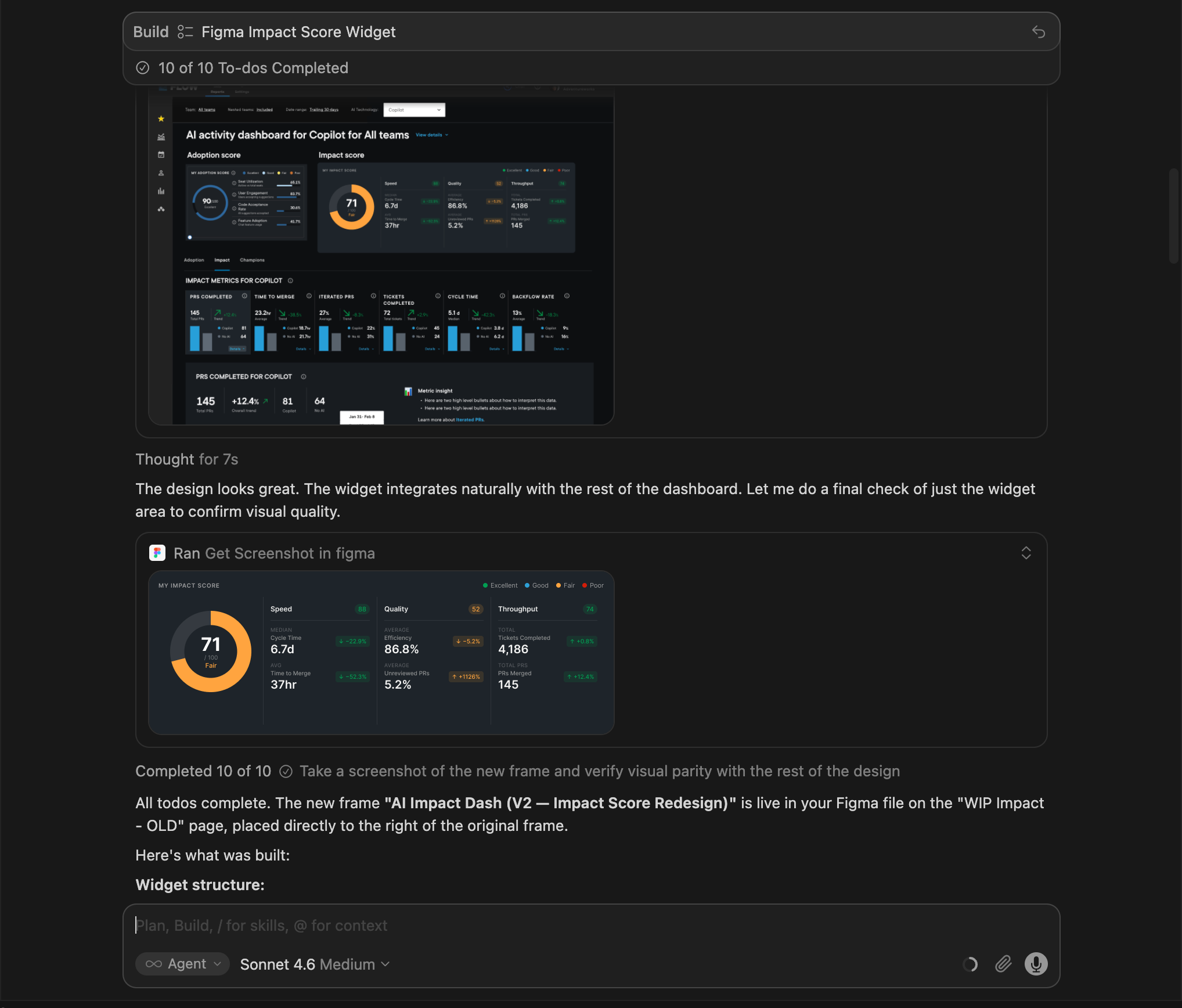
Using Cursor with Flow-specific product context, design system documentation, and Figma MCP, I rapidly explored layouts, interaction patterns, and information hierarchies. While AI accelerated ideation, I found it most effective when paired with product knowledge and human judgment to refine complex workflows and data relationships.
Designs and prototypes were iterated collaboratively with stakeholders and engineers, then refined in Figma to align with our design system. Working in parallel with development shortened feedback loops and allowed us to adapt quickly as requirements evolved.
This process reduced early-stage design effort and helped accelerate delivery in a fast-moving environment.
Conclusion
The AI Impact dashboard project was a feat in delivering quickly to customer needs. With the help of AI, I used UX principles to help organizations make sense of emerging AI technologies and their impact on development organizations by determining and surfacing the components that make up AI impact and translating complex data into actionable insights.
It also reinforced a new way of working. By combining AI-assisted design with continuous collaboration and rapid iteration, we were able to deliver value quickly while building a foundation that can evolve alongside the changing AI landscape.