Project Overview
Problem: One of Flow’s most persistent challenges has been the complexity of onboarding and the time it takes for new customers to reach value, often three to six months. Setup required extensive coordination, deep product knowledge, and ongoing support from internal teams.
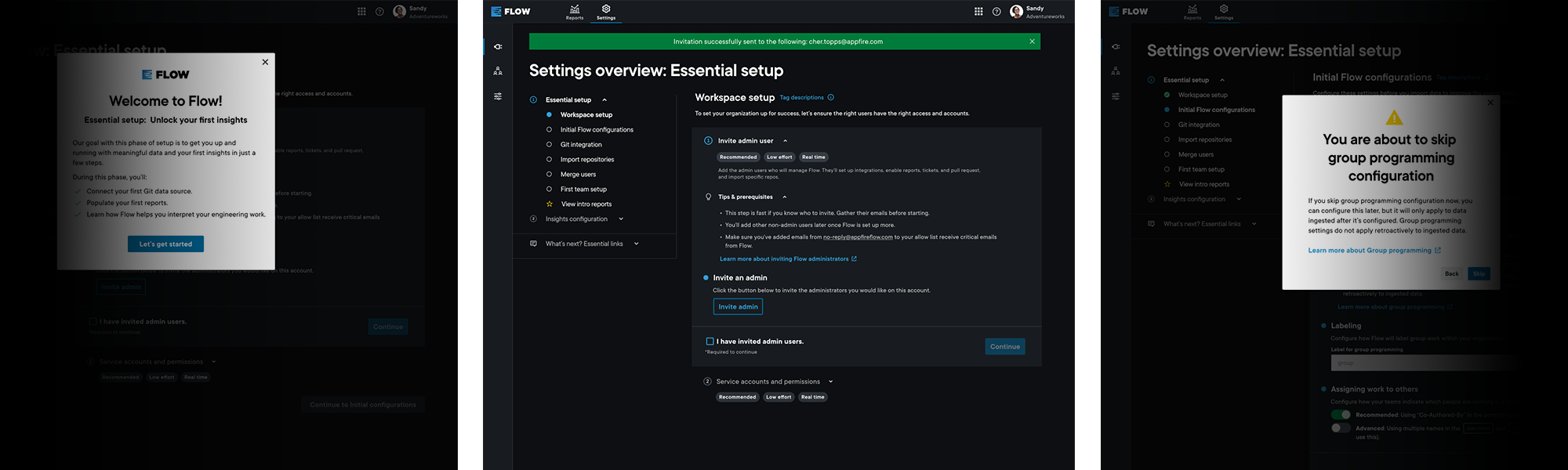
Solution: To address this, I led the design of a new App Setup experience that fundamentally changes how users are guided when they log into Flow for the first time, allowing users to see value in two weeks or less.
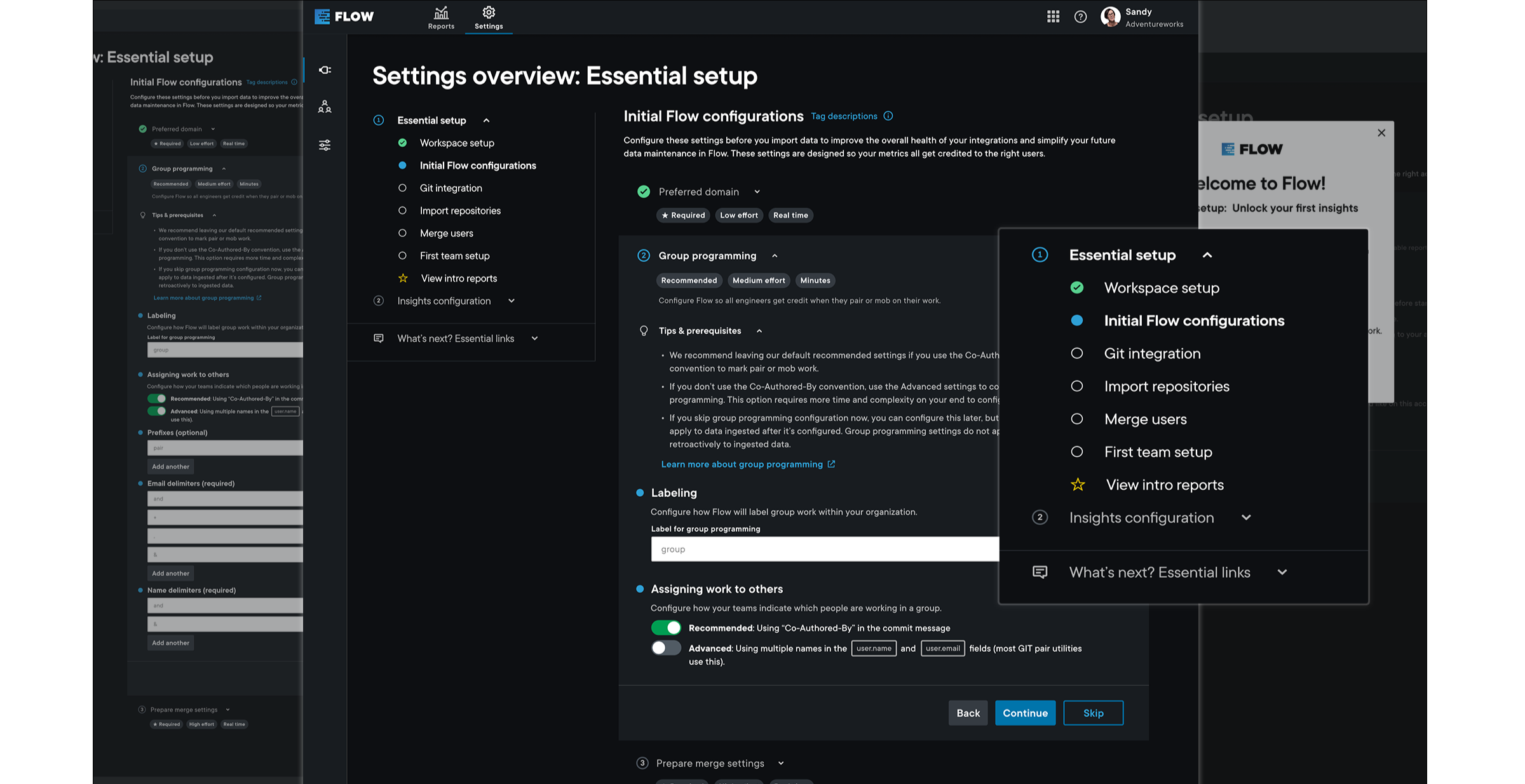
Deliverables: I designed a new onboarding UI that simplifies setup, accelerates time-to-value, and supports a more self-service customer journey. This work extended and strengthened our design system, with reusable patterns that are now being leveraged elsewhere in the application, particularly within Settings.
Context and Challenges
Flow is inherently complex and takes a long time for new customers to set up. Historically, challenges come from multiple factors, such as securing the correct permissions to configure integrations, long data ingestions timelines, and understanding Flow metrics, terminology, and next steps based on the team data surfaced. Many of these blockers were outside Flow’s direct control and required significant coordination between Flow champions and customer teams, increasing setup time and support dependency.
Design Approach
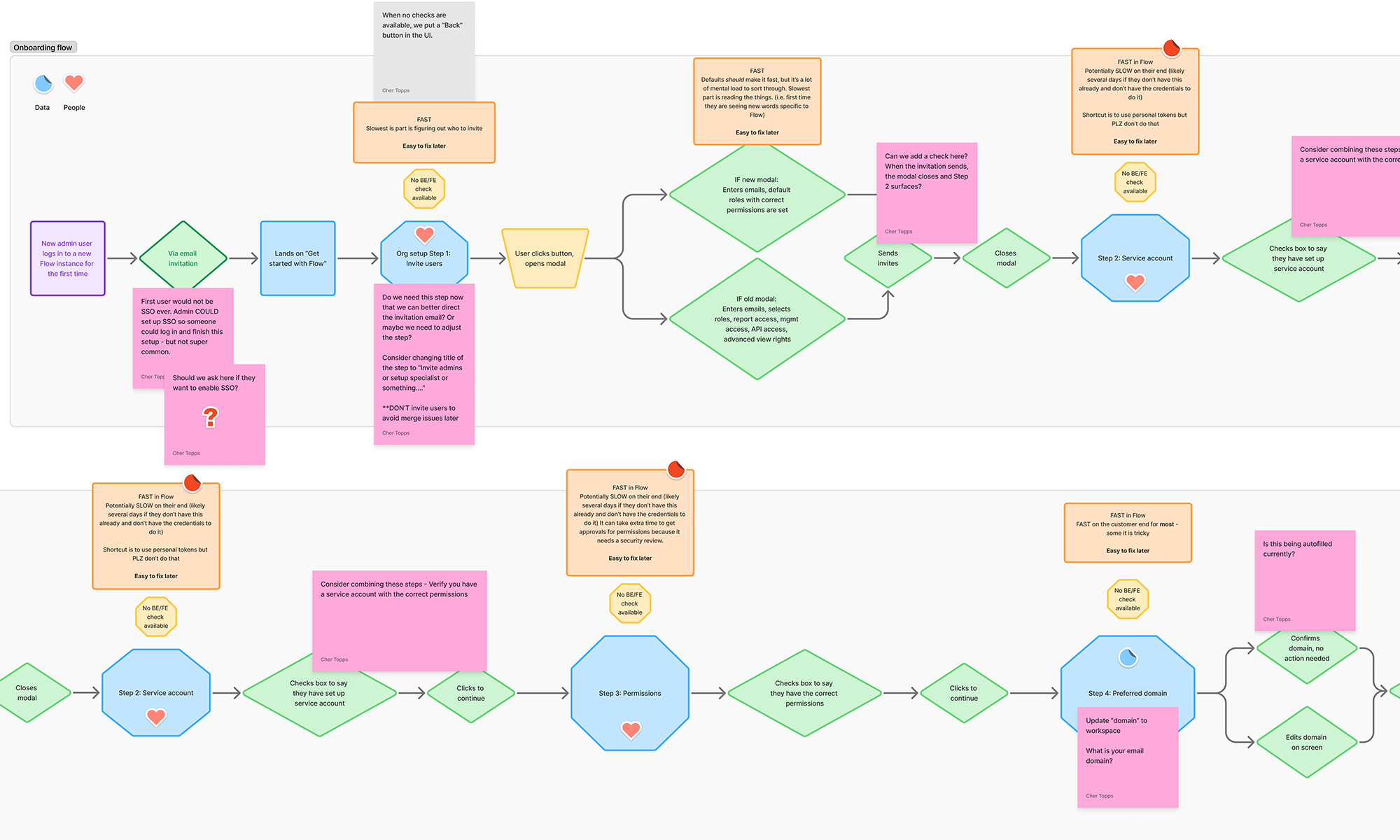
I began with documentation of current onboarding practices. I interviewed internal stakeholders in the onboarding process and mapped out the user journey, marking pain points and common areas of confusion, as well as labeling the amount of time, effort, and how critical each step is to get a user up and running. From this, I was able to create a suggested user flow for a new onboarding experience in a few phases.
Key changes to this process included a focus on customer preparation up front and a progressive, phased approach to setting up integrations.
We empower and encouraging customers to gather required information before starting onboarding, such as identifying the right stakeholders with appropriate permissions, selecting early adopters for an initial team, and configuring a service account, all before onboarding begins.
This new flow re-arranges steps from our traditional onboarding to guiding users to start with one to two git-based integrations to reduce ingestion time and surface early insights, with more complex integrations deferred to later stages. This way, they will be able to begin using certain Flow reports and seeing results while they set up the more complex integrations.
Onboarding Overhaul
This redesign intentionally shifted focus to steps essential for the application setup and tasks users can accomplish quickly and with minimal friction. The goal was to help customers reach actionable metrics, understanding, and value as early as possible.
In this workflow re-design, I also created a new UI. A multi-level navigation shows users exactly where they are in the process, what tasks are coming next, and how much more effort is required before Flow is operational.
Settings and Configuration Tagging System
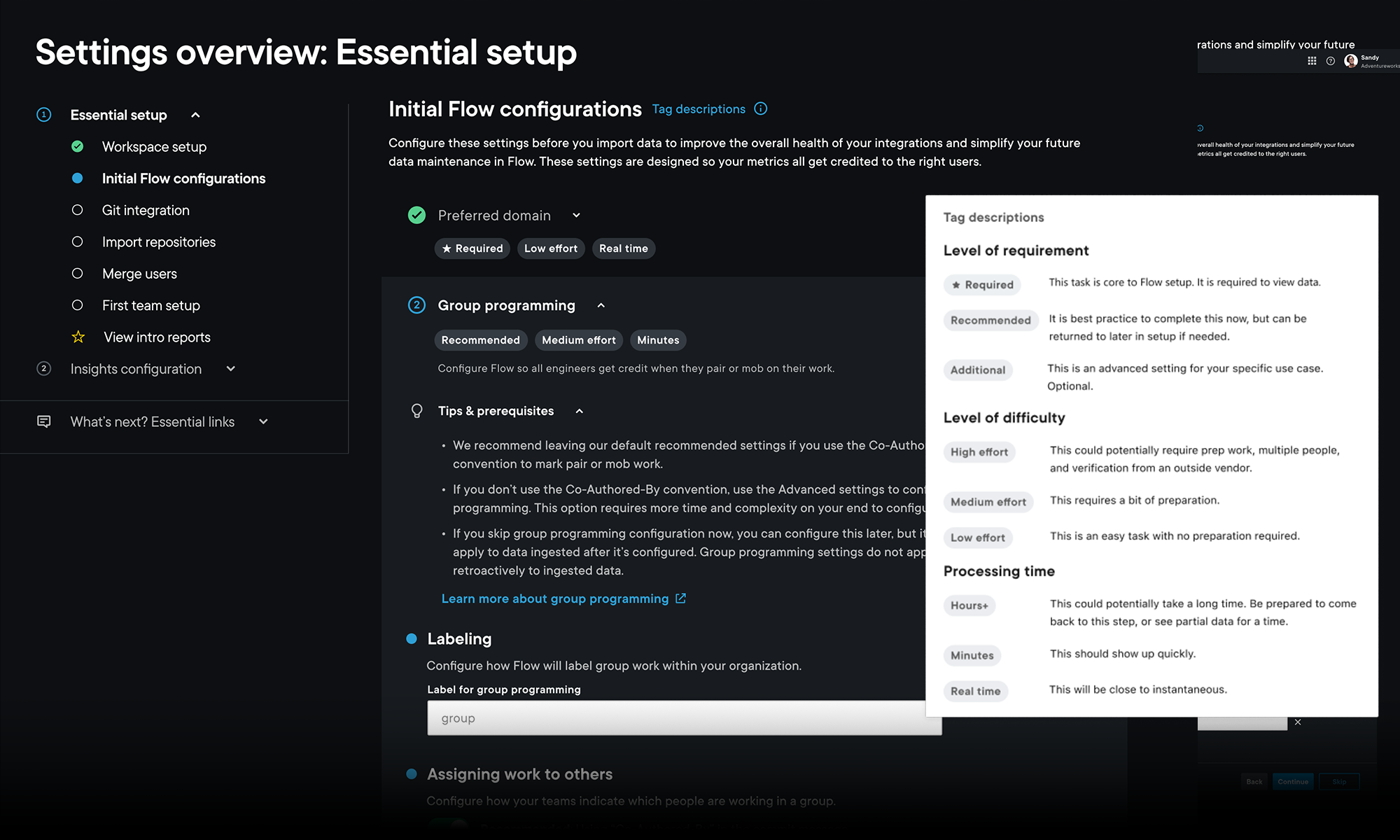
A key component of this initiative was designing a tagging system for each configuration requirement. Each tag clearly communicates to the customer the criticality of each configuration, the effort required, and the estimated time to complete. This system was extremely well received and is now being adopted across all of Settings in Flow. The result is a significantly clearer, more scalable configuration experience that reduces friction for customers, sets realistic expectations for the experience, and lowers reliance on Flow employees and support teams.
Impact and Leadership
As lead designer, I advocated for necessary design-system evolution and clearly communicating the business value of these changes. This initiative represents a major overhaul of a historically difficult experience and is expected to improve onboarding efficiency for both customers and internal teams. It is set to go to GA soon and are looking forward into digging into the metrics to support this effort.