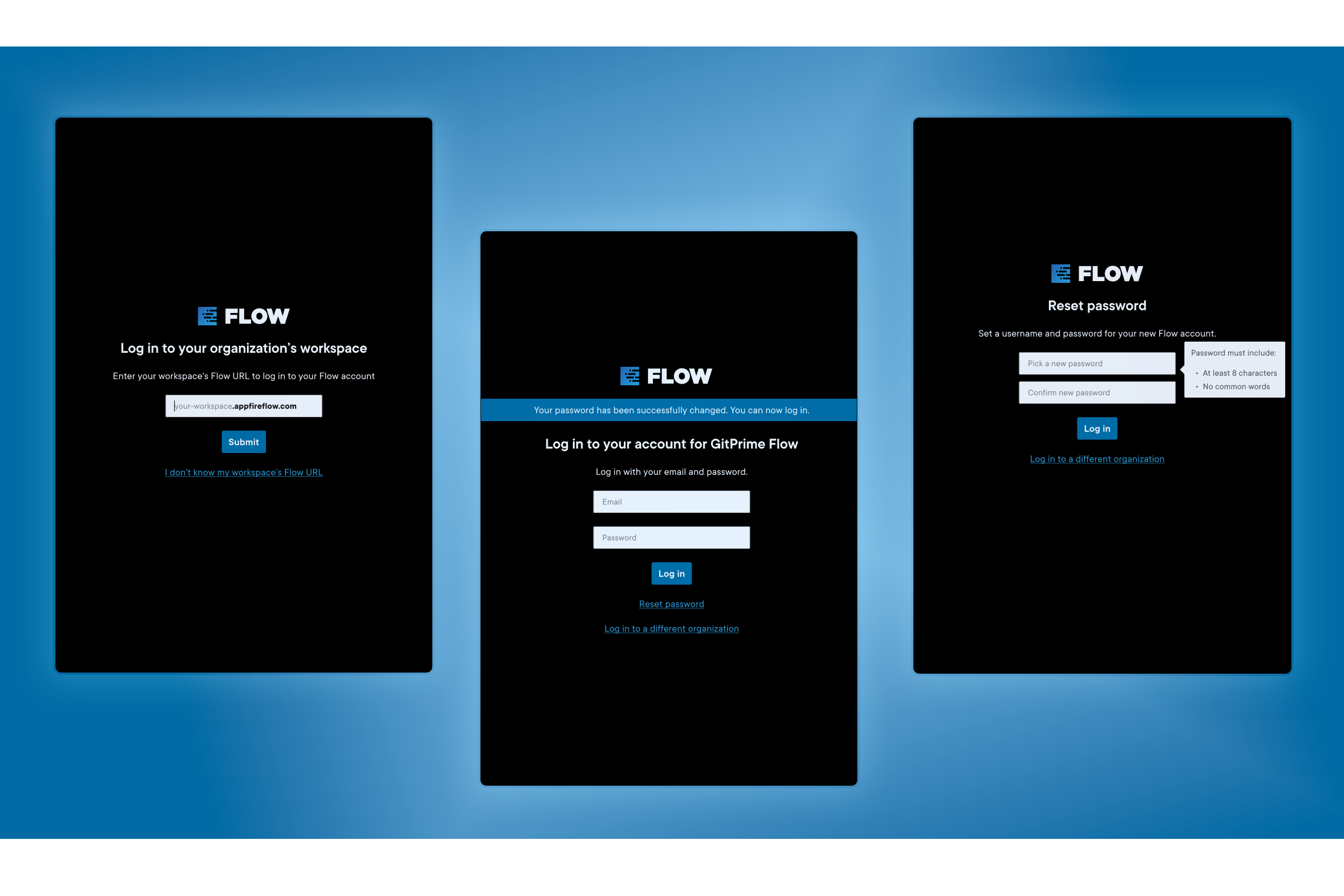
Project Overview
Problem: After Flow was acquired, authentication needed to move from Pluralsight’s system to Appfire’s platform. This migration had to happen by a fixed contractual deadline and would affect every Flow user across different subscription tiers and login types (SSO and email/password). Any disruption could prevent customers from accessing the product, putting customer trust and retention at risk.
Solution: I led UX planning and design for the authentication migration, approaching it as a system transition rather than just a UI update. I mapped the different login scenarios our customers used, worked closely with engineers to clarify how the system functioned, and translated that information into clear end-to-end login flows. At the same time, I collaborated with Product, Customer Success, and Marketing to ensure the rollout plan supported both the technical transition and the customer experience.
Deliverables:
End-to-end login flows covering all authentication scenarios
UI designs for migration states and error handling
A pre-configuration and testing experience for SAML/SSO customers
Updated login experience for email/password users
Shared documentation used by engineering and stakeholders to plan the rollout
Leadership and Impact: I coordinated closely with Engineering, Product, Support, and Customer Success to keep the migration on track and aligned across teams. The transition launched on schedule with no service disruption, allowing customers to move to the new platform without losing access to the product.
Context and Challenges
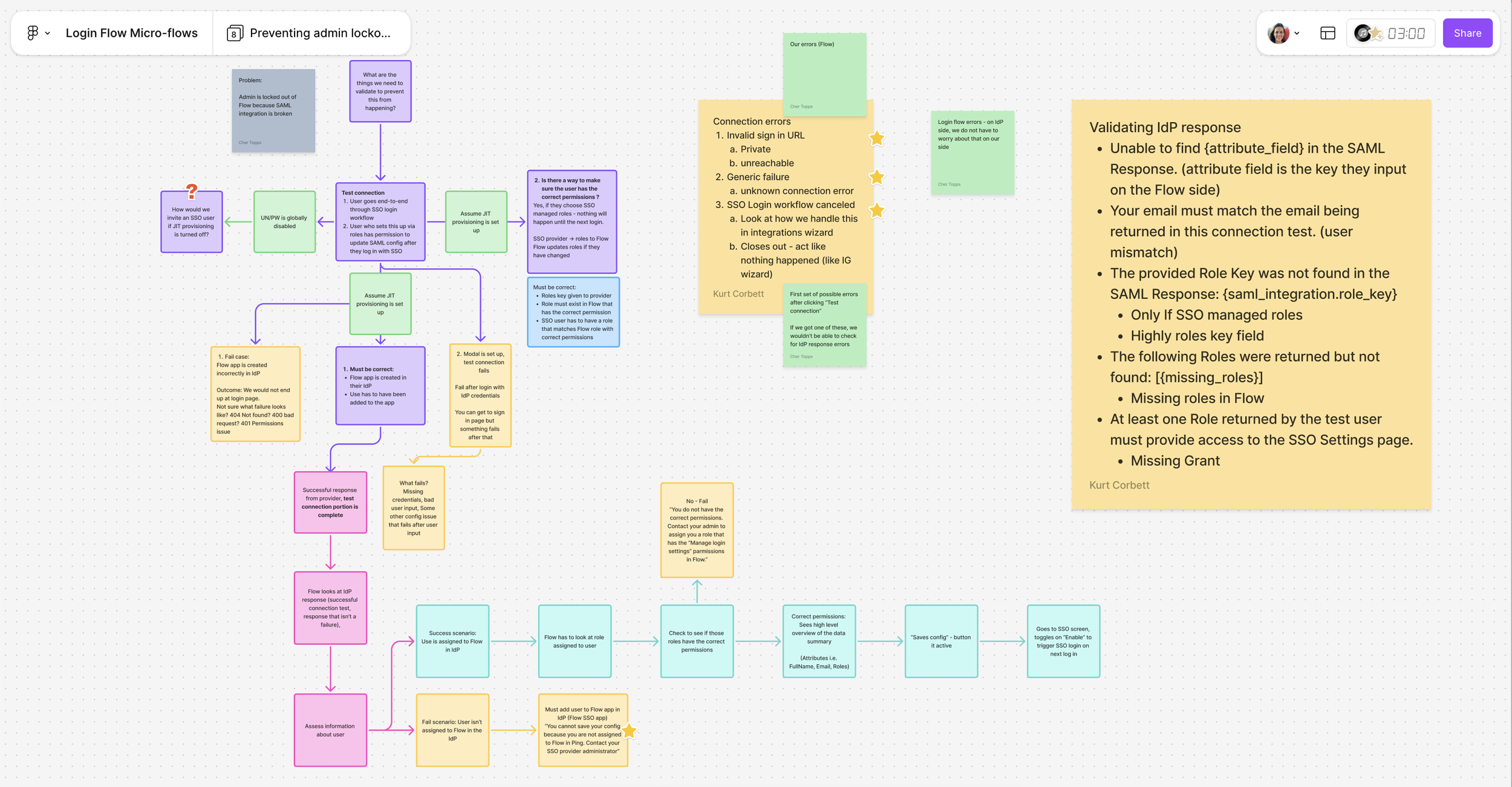
Example of one of many complex discovery flows
Flow supports multiple product instances depending on a customer’s size and subscription tier, each with slightly different authentication setups. At the start of the project, much of the existing login logic wasn’t fully documented, which meant we needed to uncover how parts of the system worked while planning the migration.
Authentication is also a high-risk area. If something breaks, users can’t log in. Because the migration had a fixed deadline, we needed to reduce risk early, coordinate across multiple teams, and ensure the transition would work smoothly for organizations with different login configurations.
Design Approach
I started by mapping the current login experience across all known scenarios. These journey maps helped visualize how authentication worked behind the scenes and made it easier for engineers to identify gaps or incorrect assumptions.
Using these maps as discussion tools, we worked through the unknown pieces together and clarified how the new Appfire authentication system needed to behave. Once we understood the technical constraints, I designed the new login flows and migration experience to support those requirements.
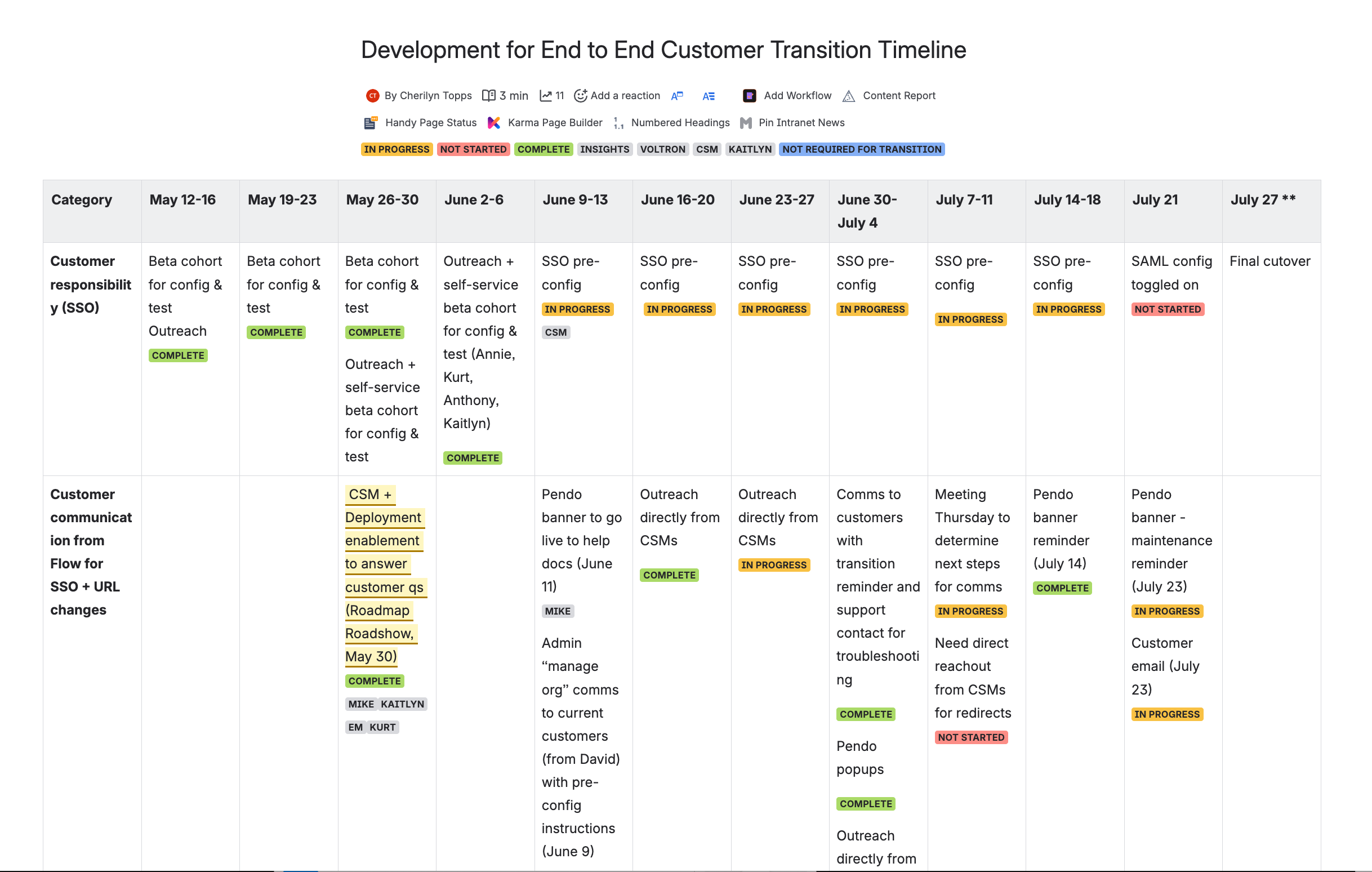
End-to-end timeline I created that was used to track the project weekly from all disciplines. Click to download full chart.
One of the biggest risks involved SAML/SSO customers. To reduce the chance of issues on migration day, I worked with engineering to design a pre-configuration and testing experience that allowed customers to set up and validate their new SSO connection ahead of the cutover. This approach spread support needs over time and helped ensure organizations wouldn’t lose access during the transition.
Conclusion
This project demonstrates how UX can play a key role in complex platform changes. By combining system thinking, clear visual documentation, and close collaboration with engineering and stakeholders, I helped guide a critical authentication migration that affected every Flow customer.
The result was a smooth transition to Appfire’s platform with uninterrupted product access—protecting customer trust and supporting a successful acquisition integration.